business
Why Luxury Houses Are Investing More In Men's Fashion Than Ever
written by felix shentaler

Luxury houses are investing more in men’s fashion than ever, and it’s due to a convergence of cultural shifts, economic recovery, and strategic recalibration. After years of sluggish performance in luxury sectors, overall growth is projected to expand at an annual rate of roughly 5 percent through 2030. While this pace is slower than the increases of earlier periods, it’s still a meaningful rebound increasingly powered by menswear markets.
The growth is currently being shaped by three distinct consumer groups: The next‑gen consumer, heavily influenced by social media, sports culture, and celebrity lifestyles. They are particularly receptive to aspirational content, the fluidity between luxury and performance wear, and brands that blend fashion with athletic aesthetics. On the other end of the spectrum is the older luxury customer, whose long‑standing commitment to classic high‑end goods and heritage items provides a stable foundation for the category. Between these two poles sits the independent luxury‑minded shopper, someone who enjoys runway trends, expressive silhouettes, and more exuberant fashion.
In response to these consumer types, luxury houses have expanded their menswear offerings far beyond traditional tailoring. Now, the category spans formal wear, smart casual, streetwear‑inflected designs, and high‑end activewear. Rather than cycling through fast fashion, men are building smaller wardrobes anchored in durability and craftsmanship. Over time, this approach proves more practical and cost‑efficient, aligning neatly with luxury’s emphasis on longevity and quality. Heritage brands have broadened ready‑to‑wear collections while strengthening bespoke and made‑to‑measure services, capturing both the desire for convenience and the appetite for personalization.
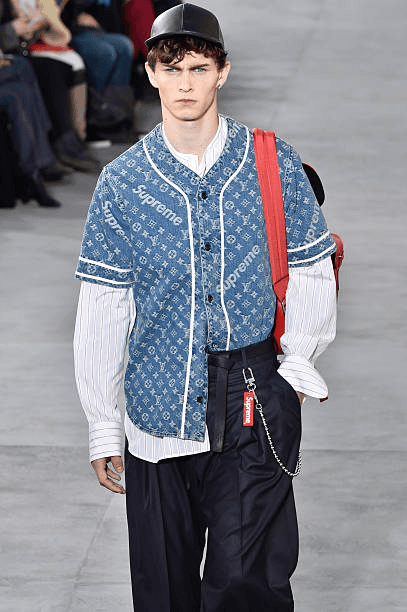
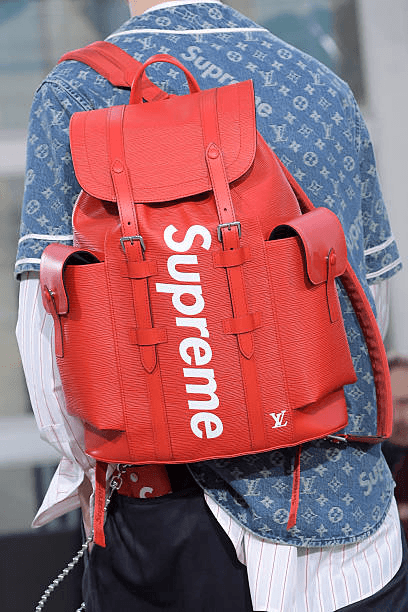
Getty Images/Peter White Getty Images/Dominique Charriau
Thom Scherdel, menswear category manager at Browns, notes that the luxury retailer’s assortment has moved from an 80/20 womenswear‑to‑menswear split to 60/40 in recent years. He points to the Supreme x Louis Vuitton collaboration in 2017 as a tipping point, marking the moment streetwear converged with luxury and made high‑end fashion more wearable. Once men could enter the luxury space through hoodies, sneakers, and casual pieces, sales surged. Menswear no longer required avant‑garde sensibilities; it simply needed relevance.
Psychologists call the link between clothing and mindset “enclothed cognition,” the idea that what we wear influences how we think and feel. Luxury clothing often heightens confidence, reinforcing the appeal of pieces that deliver both aesthetic and psychological value. Because menswear consumers tend to be less trend‑driven, consistency and quality matter. Brands are refining sizing and gender‑labelling to meet rising expectations for inclusivity, incorporating gender‑fluid elements more frequently. These adjustments also broaden the customer base, appealing to shoppers of all genders who buy menswear for its fit, aesthetic, or cultural resonance. The increasing presence of female models in menswear runways showcases the versatility of the garments and supports this shift in marketing.
Prada SS27
According to data from Grand View Research, the global luxury menswear market alone generated $26.3 billion USD ($37.3 billion CAD) in 2024 and has been forecast to reach $35.3 billion USD ($50.1 billion CAD) by 2030, with growth estimated at a compound annual growth rate (CAGR) of 5.1 percent from 2025 to 2030.
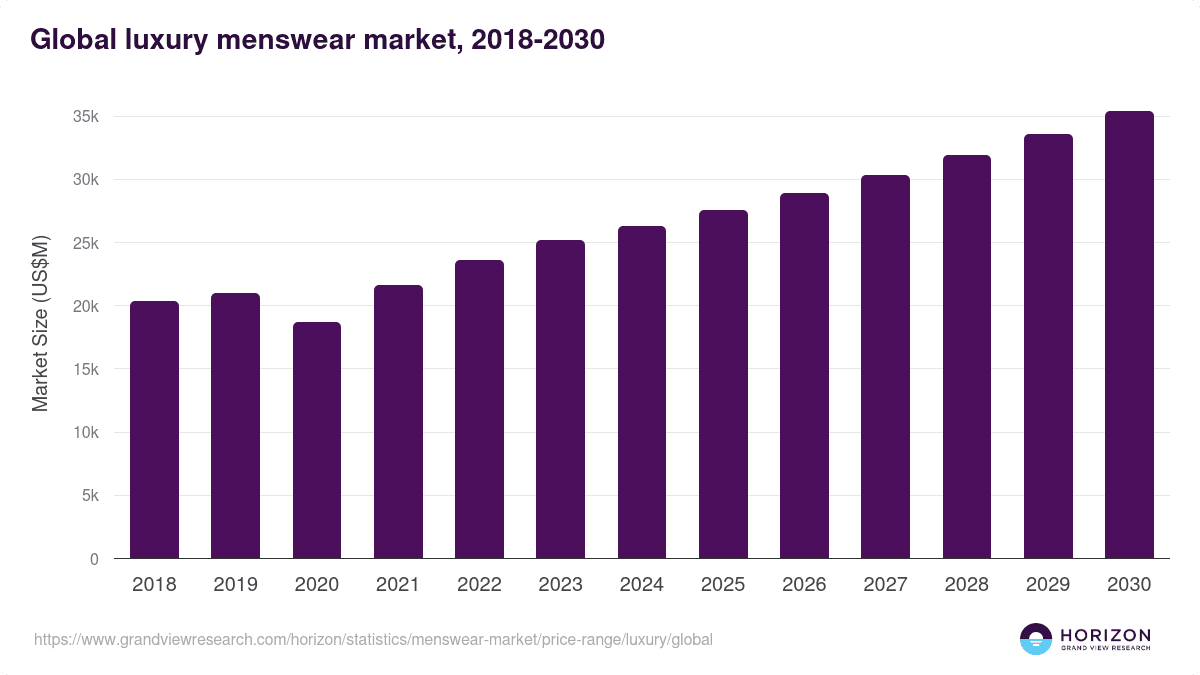
Grand View Research
In both the US and China, analysts at Euromonitor and NPD report that luxury menswear is growing faster than womenswear. Their combined impact strengthens the drive for luxury houses to prioritize menswear as a strategic growth engine in the next decade. China’s market illustrated the scale of this shift, with luxury menswear growing 38.2 percent in 2021 to $4.8 billion, driven by rising interest in unisex luxury clothing and a surge in athleisure consumption. In 2026, menswear is no longer a supporting category of luxury—it is a defining one, poised to shape how luxury grows, innovates, and expresses itself in the decade ahead.