Business
The New Generation Of Luxury Fragrance Collectors
written by laiba sheraz

Forget the handbag waitlist. The real collector's obsession of 2026 is rare fragrance, and the niche perfume houses turning scent into a $4.85 billion industry that smells, somehow, even better than it sounds.
There is a woman, and occasionally a man, though let's not pretend the market didn't build itself on the woman first, who no longer wears Chanel No. 5. Not because she can't afford it. Because she can afford better. She has discovered a niche fragrance, and she will tell you about it whether you ask or not.
The niche luxury fragrance market is projected to reach $4.85 billion by 2026, growing at a compound annual rate of 9.1%, a figure that makes the mass-market's 2.69% growth look like it is, politely, not trying very hard. The collector, it turns out, is an economy.
What drives a person to spend €400 on a 50ml bottle of something that most of the world will never smell on them? The answer is surprisingly uncomplicated: they don't want to smell like most of the world. In Europe, 63% of luxury fragrance buyers now seek customized or bespoke scents. The desire for individuality, always present, has simply been given a very expensive outlet.
Parfums de Marly, the French house drawing on the aesthetic codes of 18th-century Versailles, has built one of the most enviable cult followings in contemporary niche fragrance. Its bottles look as though they were sourced from a royal cabinet. Its scents, Layton, Herod, and Delina, have inspired the kind of online community that brands spend decades trying and failing to manufacture. Parfums de Marly did not manufacture it. It earned it, one extraordinary formula at a time.
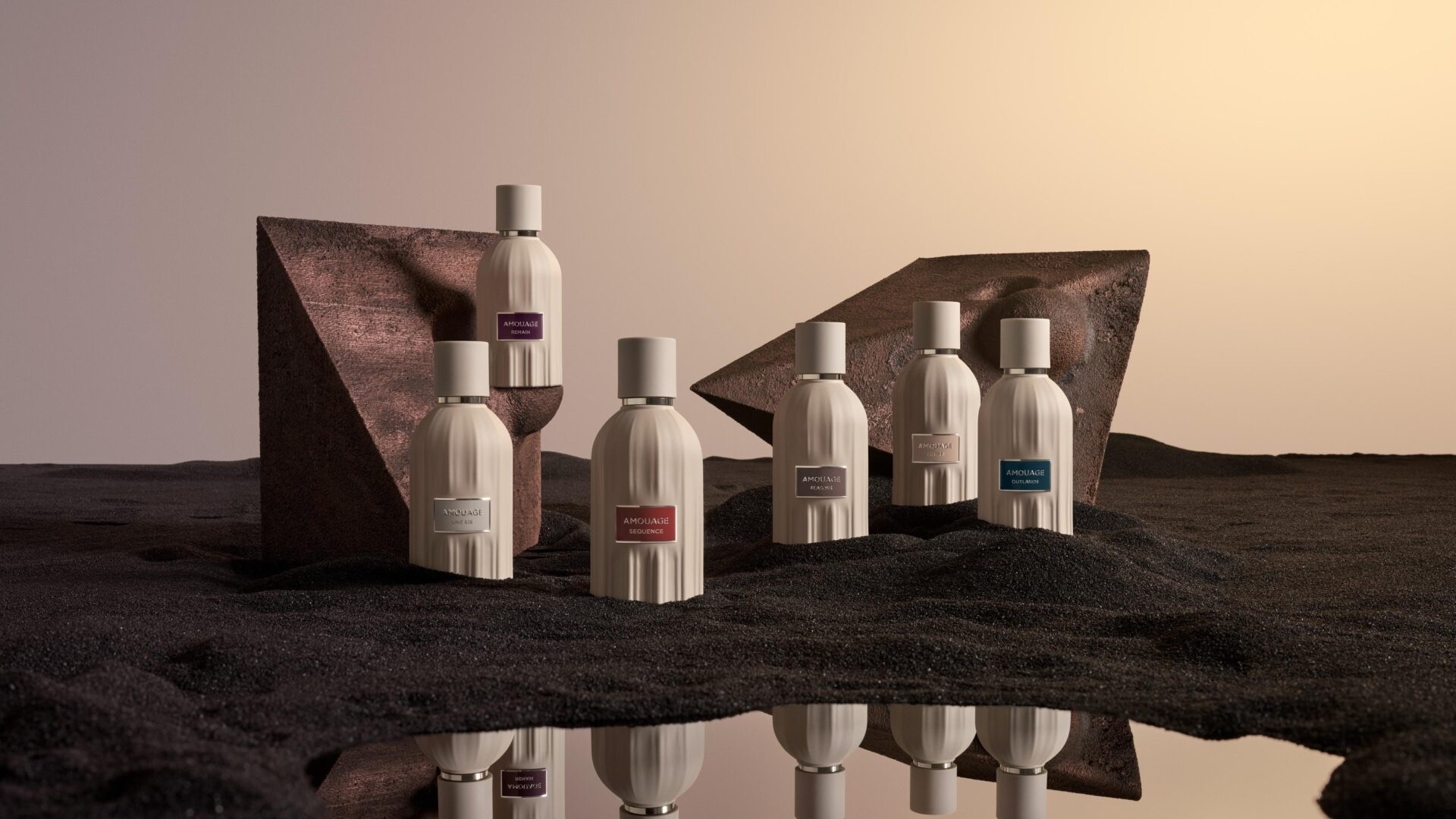
Photo: Amouage luxury perfume bottle collection 2025
Amouage, founded in 1983 at the request of the Sultan of Oman, was built on the premise that fragrance should feel like architecture, structural, grand, and specifically not for everyone. Its extraits de parfum use some of the rarest raw materials on the market, including aged Omani frankincense, and its limited editions have become the kind of collector objects that appear in wills. The house's "Exceptional" line presents bottles that function equally as objets d'art.

Photo: Frederic Malle Portrait of a Lady perfume editorial
Frederic Malle operates on a different logic entirely: the genius model. Malle acts as publisher, giving the world's most talented perfumers, Dominique Ropion, Carlos Benaïm, and Jean-Claude Ellena, complete creative freedom to produce work that would otherwise never reach a consumer. Portrait of a Lady, created by Ropion, remains the most referenced fragrance in collector circles, not because it is popular, but because it is extraordinary.
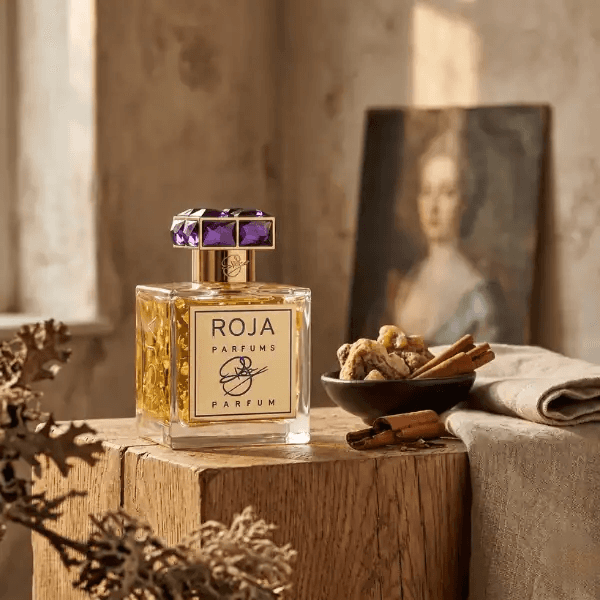
Photo: Roja Parfums Haute Parfumerie collection bottles
Roja Parfums, founded by Roja Dove in 2004, operates at the apex of extractable luxury. His Haute Parfumerie line uses ingredients, such as Bulgarian rose at peak harvest, Haitian vetiver, orris butter aged for three years, that cost more to source than most perfumes retail for. The collector who owns a full Roja Parfums line is not merely a fragrance enthusiast. She is a connoisseur in the truest, most appetizing sense of the word.
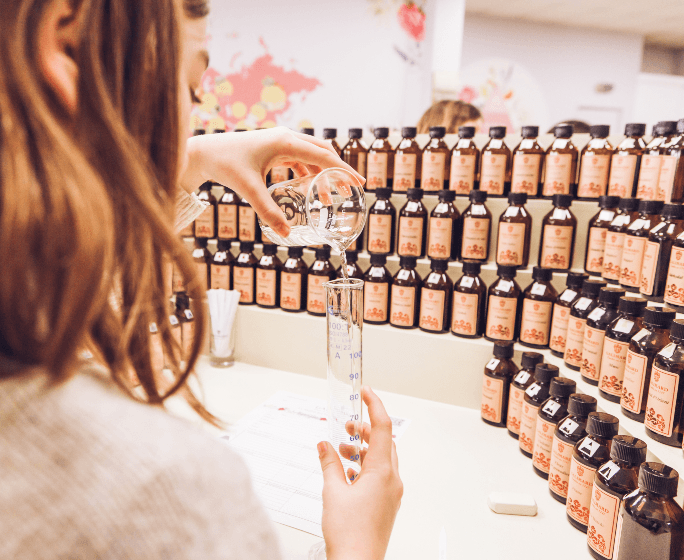
Photo: bespoke perfume consultation atelier Grasse France
The bespoke appointment has become the new status symbol. Houses now offer olfactory consultations that function more like therapy than retail, a guided conversation through memory, emotion, and desire, resulting in a scent that belongs to one person alone. In a world where the same luxury handbag exists in 50 countries simultaneously, the idea of a fragrance that exists in exactly one wardrobe is, for a certain kind of person, worth every euro.
I once knew a woman who said she couldn't justify spending €500 on perfume. She now owns seven bottles of Roja Parfums and a waiting list position for a bespoke commission with a house in Grasse. The fragrance didn't change her. It simply found her.