runway
The Most Beautiful Couture Dresses Of The Season
written by mariana lora
Haute Couture Week once again proved why couture remains fashion's highest form of art. Across Paris, designers presented collections that balanced fantasy with technical excellence, offering gowns that will shape red carpet fashion and museum exhibitions alike. While every house interpreted couture through its own creative lens, a handful of dresses stood above the rest for their artistry, innovation and cultural impact.
Here are the most beautiful couture dresses of the Fall Winter 2026 season.
1. Schiaparelli's sculptural finale gown
Creative director Daniel Roseberry opened couture week with a collection inspired by surrealism and old Hollywood glamour. The standout look was the closing ivory gown, constructed with a dramatic sculptural silhouette that appeared to float around the body. The dress combined precise corsetry with exaggerated proportions, creating an architectural shape that remained unmistakably elegant.
Roseberry paired the gown with Schiaparelli's signature gilded detailing, reinforcing the house's reputation for turning couture into wearable sculpture. Vogue described the collection as a reflection on timeless elegance rather than fleeting trends, while Roseberry himself emphasized craftsmanship over spectacle. The finale became one of the week's defining fashion moments because of its balance between fantasy and refinement. (Vogue, Schiaparelli)
2. Chanel's embroidered ivory masterpiece
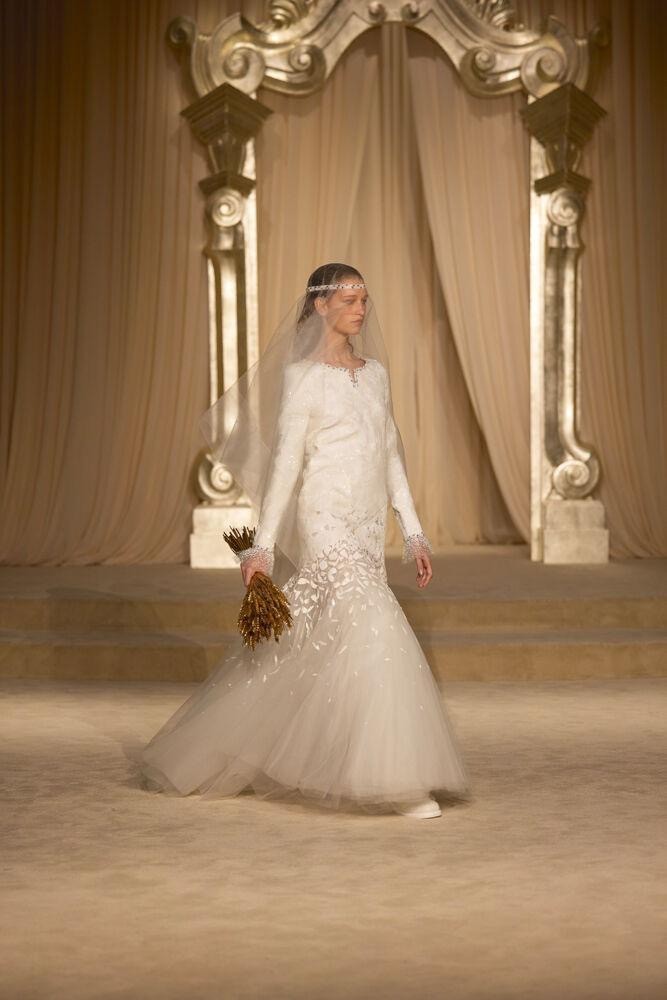
Chanel's Fall Winter 2026 Haute Couture collection celebrated the maison's enduring codes through delicate embroidery, feathers and soft neutral tones. Among the strongest looks was an ivory gown featuring intricate floral embroidery layered over a fluid silhouette that moved effortlessly down the runway.
The design demonstrated the meticulous work of Chanel's Métiers d'Art ateliers, where embroidery, embellishment and hand finishing remain central to couture production. Rather than relying on dramatic volume, the gown showcased restraint and precision, qualities that have defined Chanel couture for decades. According to Chanel, the collection drew inspiration from nature and the countryside, bringing softness and lightness to traditional couture techniques. (Chanel; Vogue)

3. Elie Saab's crystal embellished silver gown
Elie Saab once again delivered the glamorous eveningwear that has made him a favourite among Hollywood stylists. His standout silver gown featured thousands of hand applied crystals cascading over a fitted silhouette before opening into a dramatic flowing skirt.
The dress reflected Saab's mastery of embellishment without overwhelming the wearer. Light caught every crystal, creating movement with each step. Fashion critics noted that the collection reinforced Saab's position as one of couture's leading designers for red carpet dressing, with gowns that combine intricate craftsmanship and timeless femininity. (Elie Saab; Women's Wear Daily)
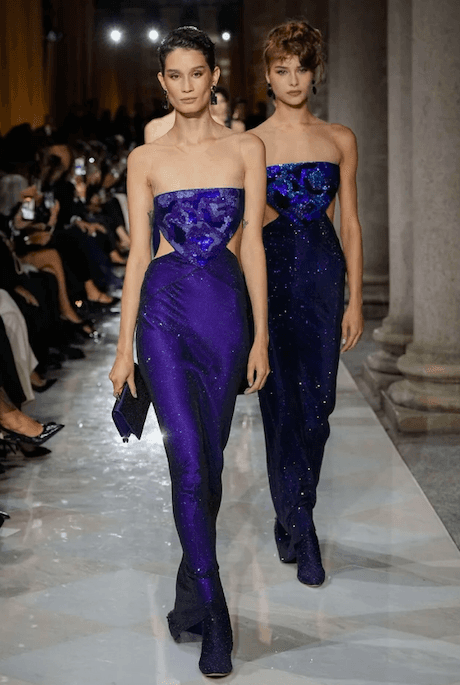
4. Armani Privé's midnight blue creation
Giorgio Armani approached couture through elegance rather than extravagance. His midnight blue velvet gown stood out for its clean lines, rich texture and subtle sparkle concentrated around the neckline and bodice.
Instead of relying on oversized silhouettes, Armani demonstrated how expert tailoring and luxurious fabrics can create visual impact. The gown reflected the quiet sophistication that has become synonymous with Armani Privé, proving that couture can be both understated and memorable. (Armani; Vogue Runway)
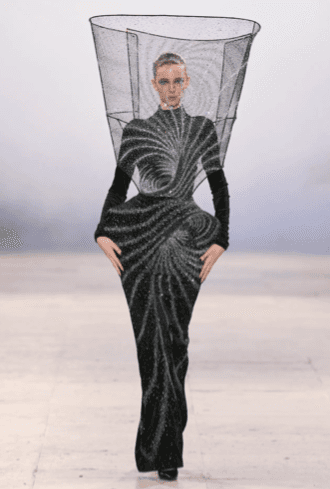
Image by Vogue
6. Rahul Mishra's Architectural Masterpiece
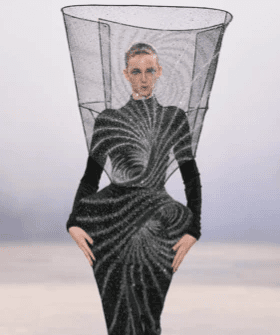
One of the most unforgettable looks in Rahul Mishra's Alchemy collection was a dramatic black sequined gown framed by an enormous wire structure that flared outward from the shoulders, creating a silhouette reminiscent of a chalice or ceremonial cup. The architectural piece embodied Mishra's interpretation of earth, though not in a conventional sense. Rather than referencing landscapes or organic textures, the gown evoked cosmic forces, with densely embroidered spirals of sequins resembling black holes and celestial formations. The towering wire frame transformed the model into a sculptural figure, blurring the line between fashion and installation art. Inspired by Mishra's reflections on the five elements during a retreat in the Himalayas, the look demonstrated his ability to translate philosophical ideas into couture through the exceptional craftsmanship of Indian artisans. It was one of the collection's boldest statements, illustrating that for Mishra, couture is not simply about dressing the body but about giving shape to ideas that exist somewhere between science, nature and imagination.