
Fashion
Swatch x Audemars Piguet: Power Move or Brand Damage?
Written By Esahana Nanar

Luxury fashion has officially entered its collaboration era, and honestly, no industry is safe anymore, not even Swiss watchmaking.
Over the last few years, fashion has become completely obsessed with accessibility disguised as exclusivity. Louis Vuitton collaborates with streetwear brands. Tiffany & Co. drops sneaker-inspired campaigns. Rimowa makes collectible luggage cases feel like hype objects. And now, one of the most respected names, Audemars Piguet, has stepped directly into that same cultural arena through its wildly controversial Swatch collaboration: the “Royal Pop.”
The internet completely lost its mind over it.
The Audemars Piguet x Swatch “Royal Pop” collaboration instantly became one of the most polarizing luxury releases of the year, not just because of what it was, but because of what it represented. For many collectors, this was bigger than a product launch. It felt symbolic of a much larger shift happening inside luxury.
The question surrounding the collaboration became immediate: was this a brilliant cultural power move, or the beginning of luxury brand dilution?
Honestly, the answer is probably both.
At its core, the “Royal Pop” release was never really designed for traditional Audemars Piguet clients. People spending six figures on Royal Oaks are not suddenly replacing their mechanical watches with colorful pocket-watch bag charms from Swatch. That was never the point.
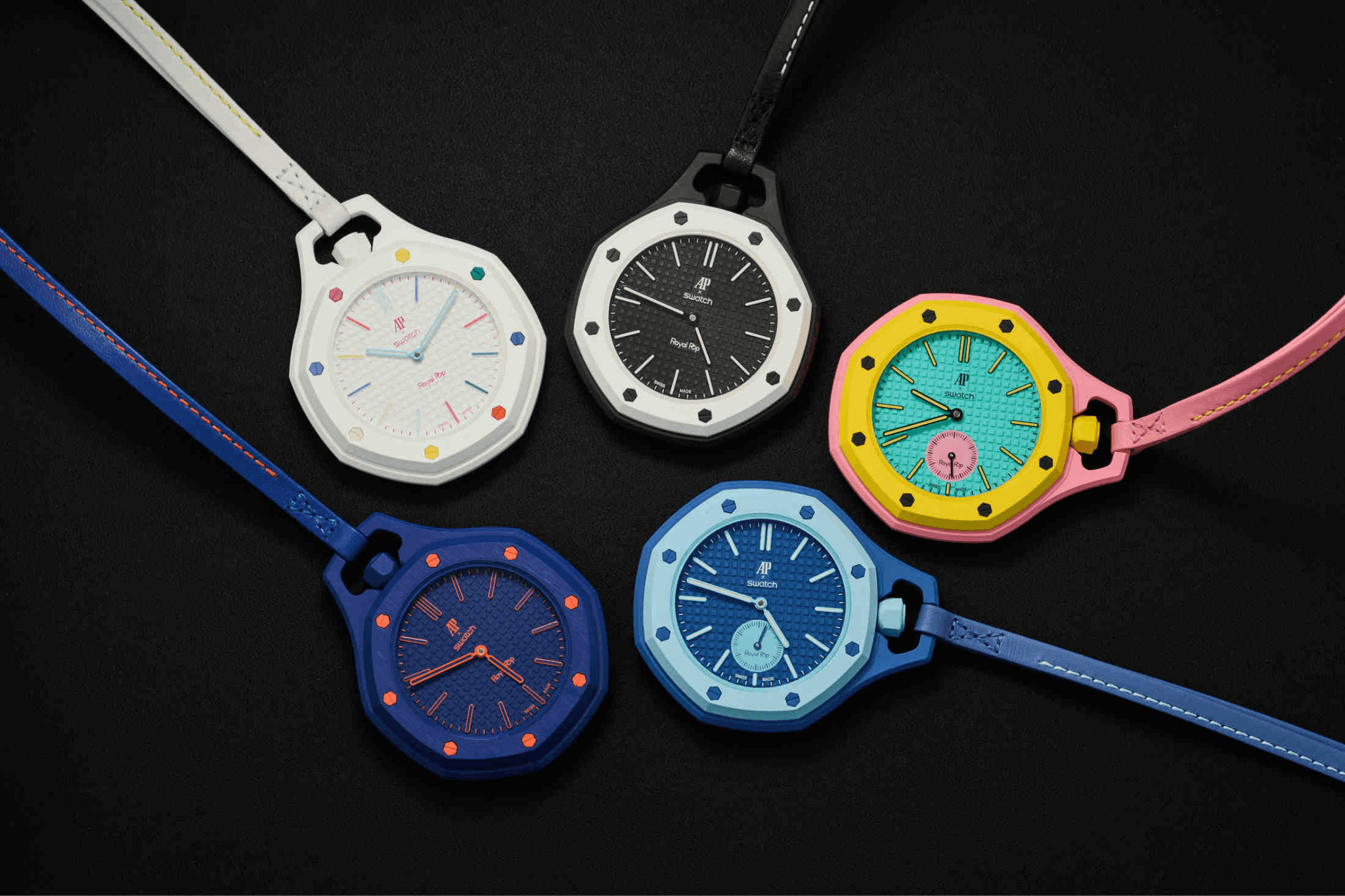
The collaboration was designed as a top-of-funnel cultural strategy, a way to hook younger consumers into the world of Audemars Piguet before they can actually afford the brand itself.
From a marketing perspective, it was incredibly smart.
Luxury today operates differently than it did twenty years ago. Brands are no longer selling solely through exclusivity or craftsmanship alone. They are selling through visibility, hype, and cultural relevance. Gen Z and Gen Alpha consumers discover luxury through internet moments first and products second. A viral collaboration can now introduce a luxury house to millions of young consumers faster than traditional advertising ever could.
That is exactly why Swatch collaborations work.
The MoonSwatch proved this back in 2022 when Omega partnered with Swatch to create affordable Bioceramic versions of the Speedmaster. Collectors initially mocked the release, calling it gimmicky and cheapening to Omega’s prestige. Instead, the opposite happened. MoonSwatches became nearly impossible to get, resale prices skyrocketed, lines wrapped around stores globally, and most importantly, interest in the real Omega Speedmaster actually increased.
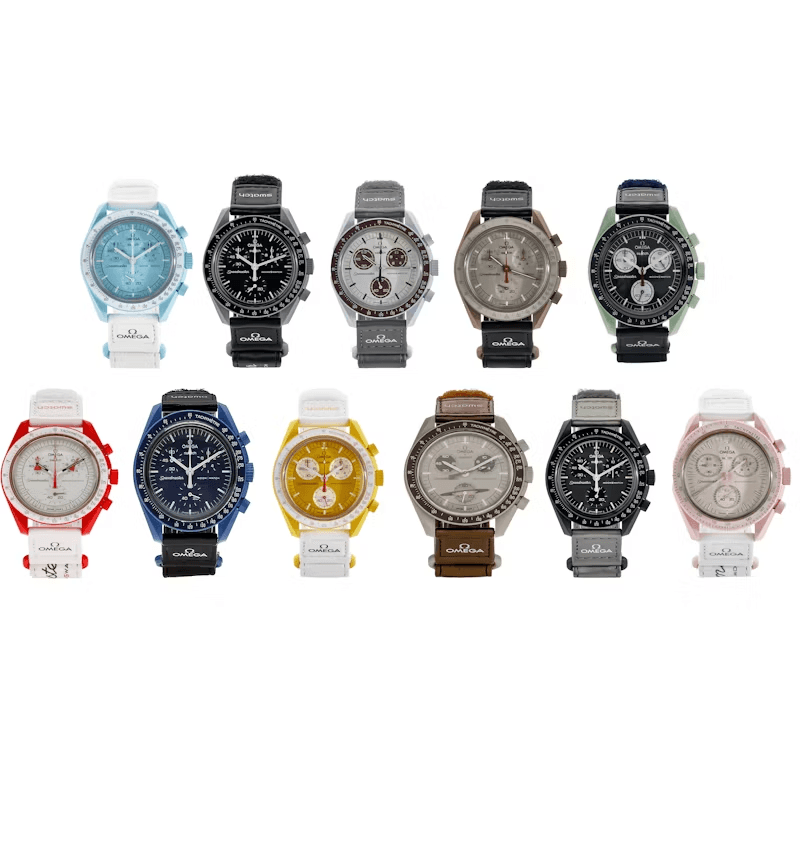
The collaboration created what marketers call a “halo effect.” Consumers who bought the affordable version became emotionally invested in the luxury original.
The AP x Swatch collaboration is clearly attempting to replicate that same formula but with far higher stakes.
Unlike Omega, Audemars Piguet is fiercely independent and positioned within the “Holy Trinity” of Swiss watchmaking alongside Patek Philippe and Vacheron Constantin. That makes the idea of an AP x Swatch collaboration feel much more shocking to collectors. Audemars Piguet has historically operated within an ultra-exclusive world built around scarcity, elite clientele, and handcrafted mechanical artistry. So watching the brand suddenly enter the realm of colourful pop-art-inspired accessories obviously naturally triggered backlash.
The consumer reactions were brutal at first.
When rumors of the collaboration initially surfaced, fans expected an affordable Royal Oak-inspired wristwatch similar to the MoonSwatch. Instead, Swatch revealed colourful pocket watches and bag charms that many collectors immediately dismissed as childish, unserious, and disconnected from the actual authentic spirit of Audemars Piguet.
Watch forums exploded with criticism. Social media comments called the release “luxury gone too far,” while hardcore enthusiasts accused AP of turning one of watchmaking’s most prestigious names into a novelty for online hype and unneeded clout.
But while collectors complained online, something else happened in real life: people lined up anyway.
That shift says everything about where luxury culture is heading.
The “Royal Pop” collection succeeded because it understood modern consumer psychology. Younger shoppers care about collectibility, scarcity, internet conversation, and cultural participation just as much as craftsmanship. Owning something limited, difficult to access, and socially recognizable has become part of luxury.
For decades, luxury watches existed almost entirely outside internet hype culture. They represented patience, craftsmanship, generational wealth, and quiet prestige. Collaborations like “Royal Pop” pull watchmaking directly into the same fast-moving trend ecosystem that dominates streetwear and fashion today.
But whether collectors like it or not, luxury brands understand something important: younger consumers are the future.
Most Gen Z consumers are not entering luxury through heritage appreciation or technical watchmaking knowledge. They are entering through culture. Through collaborations. Through viral releases. Through resale platforms. Through internet aesthetics. And collaborations like this create emotional entry points into brands that once felt completely inaccessible.
That does not necessarily dilute luxury positioning. If anything, it expands the mythology surrounding the brand.
Because realistically, nobody buying a colourful Swatch pocket watch believes they own an Audemars Piguet Royal Oak. But they do feel connected to the brand story, and that connection may eventually evolve into long-term luxury aspiration later in life. Building relationships with luxury consumers across all demographics grows a sense of loyalty, nurturing a new age of future customers.
That is the real strategy behind the collaboration.
The AP x Swatch “Royal Pop” collection may have frustrated traditional collectors, but from a cultural standpoint, it accomplished exactly what it needed to do: dominate conversation, create scarcity, attract younger audiences, and keep Audemars Piguet relevant within a rapidly evolving luxury landscape.
And in 2026, relevance itself is the most valuable luxury currency of all.